

Amazon Great Freedom Sale 2026 gaming laptops under ₹1 lakh are finally worth a hard look. After bank offers and exchange, several RTX 3050 and even RTX 4050 machines from Asus, HP and MSI drop into the 70k–99k range. The best ones balance real 1080p performance, upgrade paths and service that works in India without the usual marketing fluff.
Prices move daily and bank discounts change by card. Treat every figure below as a snapshot and verify the final checkout total yourself. Waiting for the next big sale is an option, but laptop MRPs have been climbing, so a clean Freedom Sale deal is often the safer move.
What actually matters under ₹1 lakh
Ignore the flashy “RTX” badge and check three things. First, VRAM: 6GB is clearly better than 4GB for newer titles and texture packing. Second, TGP (the power the GPU is allowed to draw). A 75W or higher RTX 3050 outperforms a lower-power version even if the name is identical. Third, RAM and storage that you can upgrade later. Most of these chassis still give you an extra SODIMM slot and a second SSD bay.
Display is the next filter. A 144Hz IPS panel at 300 nits is the current baseline. Anything dimmer forces you to game in a dark room. Battery life will never be great on these machines—expect 4–6 hours of light use and far less while gaming. That is normal; do not buy a gaming laptop expecting all-day unplugged productivity.
Also watch the weight. Most of these land between 2.2 kg and 2.5 kg. If you need to carry the laptop every day, factor that in before you fall for a pure performance number. Cooling design matters too. Machines that dump heat out the rear and sides stay quieter longer than those that only vent from the bottom.
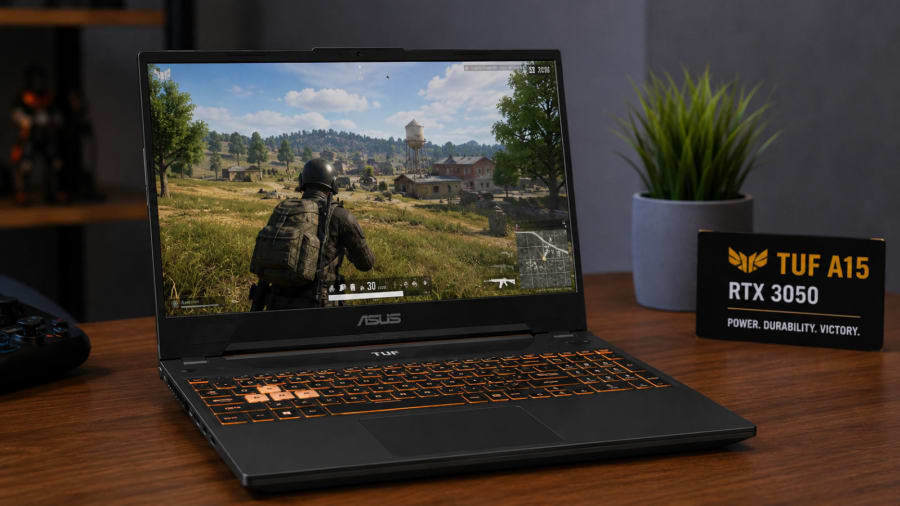
Best Asus TUF A15 deals
The 2026 Asus TUF A15 remains the volume king in this price band. Configurations with Ryzen 7 processors and RTX 3050 (mostly 4GB) are listing around ₹77,990–₹99,990 depending on RAM and whether Office is bundled. With select bank cards the effective price often lands in the mid-to-high 60k range on the cleaner 16GB models.
Performance. Solid 1080p medium settings on most current titles when DLSS is enabled. Expect the 4GB VRAM to become the limit first on newer open-world games.
Upgrade path. Extra RAM and SSD slots are present on the versions that matter. Confirm the exact SKU because a few locked-down units still exist.
Build and service. TUF chassis feels more solid than the plastic Victus shells. Asus service centres are widespread in India and usually quicker than the competition for gaming machines.
Skip any TUF that still ships with only 8GB RAM or a non-upgradeable SSD. Those configurations are false economy once you start installing modern games. The 144Hz panel is consistent across the range and bright enough for indoor use. Keyboard is decent for long sessions; the RGB is single-zone on most units and can be left off if you prefer less distraction.
HP Victus options that make sense
HP is aggressive this sale. The Victus with Ryzen 7 7445HS and RTX 4050 is currently the standout under ₹1 lakh at roughly ₹97,990 before further bank cuts. That is a genuine step up from the 3050 machines for 1080p high settings and light content creation.
Lower down, the 14th-gen Intel Core i5 + RTX 3050 6GB variants sit around ₹92,990 list and frequently drop closer to ₹80k after discounts. The 6GB VRAM is the important differentiator here. A few Ryzen 7 + RTX 2050 models also appear under ₹72k, but those are better treated as everyday laptops with occasional gaming rather than dedicated gaming machines.
RAM advantage. Several Victus units now ship with 24GB DDR5 out of the box. That removes the immediate upgrade tax and helps multitasking while a game runs in the background.
Display. 144Hz and 300 nits is standard. Colour accuracy is average; do not expect factory calibration for photo work.
Thermals and noise. Victus runs hotter and louder under sustained load than the better TUF models. Keep the laptop on a hard surface and consider a simple cooling pad if you game for hours.
HP’s service network is dense, which matters more than brand loyalty once the warranty is needed. Some Victus models include a short Xbox Game Pass trial; treat it as a bonus rather than a reason to buy.
MSI and the rest of the field
MSI Cyborg 15 with a newer Intel Core 5 and RTX 5050 is listed near ₹99,990. On paper the GPU is attractive, but Cyborg chassis have a history of average thermals and limited upgrade options. Check recent user reports for coil whine and hinge quality before committing.
Lenovo LOQ models with RTX 4050 appear just above the ₹1 lakh mark after discounts and are worth watching if you can stretch a little. They usually offer better colour coverage and a MUX switch, which helps both performance and battery life. Acer ALG units with 6GB RTX 3050 occasionally surface under ₹70k but stock is inconsistent.
Buy the configuration with the most VRAM and the highest realistic TGP you can afford inside ₹1 lakh. Everything else is secondary once the GPU runs out of memory.
How to actually get the lowest price
Sale prices on the product page are rarely the final number. Apply every available bank offer at checkout. HDFC, SBI and Axis cards have been the most consistent this sale for instant discounts of ₹5,000–10,000 on these laptops. Exchange an old working laptop if the bonus is meaningful; dead machines rarely fetch useful value.
No-cost EMI for 6–12 months is widely available and sensible if the interest-free period is genuine. Avoid long tenures that quietly add processing fees. Always screenshot the final amount before paying—prices and offers can change between cart and payment page.
Also watch for coupon codes that appear only after you add the laptop to cart. Some drop the price by another ₹1,000–2,000. Combine that with exchange and bank offer only if the site allows stacking; many do not.
Model focus | Typical sale range | Key strength | Watch-out |
|---|---|---|---|
Asus TUF A15 RTX 3050 | ₹65k–80k after banks | Build + upgrade slots | Mostly 4GB VRAM |
HP Victus RTX 4050 | ₹90k–98k | Real performance step-up | Heat under load |
HP Victus RTX 3050 6GB | ₹78k–93k | VRAM + 24GB RAM options | Plastic feel |
MSI Cyborg RTX 5050 | ~₹99k | Newer GPU | Thermals and support |
Prices above are approximate effective ranges during the ongoing sale. Confirm live listings and card offers yourself.

Should you buy now or wait?
If your current laptop is struggling with the games or editing work you already do, the Freedom Sale deals are good enough. The gap between a well-chosen 3050/4050 machine today and waiting three months is smaller than the risk of base prices rising again.
If you can comfortably wait and do not need the machine immediately, keep an eye on Flipkart’s next big event as well. Some users report slightly deeper bank cuts there, but stock of the better configurations can vanish faster.
One final practical note: these are still heavy, power-hungry machines. Plan for a desk setup, a good mouse, and realistic expectations on battery. For pure portability or long battery life, look elsewhere—our more guides cover thin-and-light options separately.
Check the final price with your card, confirm the exact GPU VRAM and upgrade options on the product page, and buy only what you will still be happy running in 2027. That is the only test that matters. Avoid chasing the absolute lowest price if it means locking yourself into a 4GB GPU or non-upgradeable storage. The extra few thousand rupees spent on VRAM and RAM usually pays for itself within the first year of ownership.