
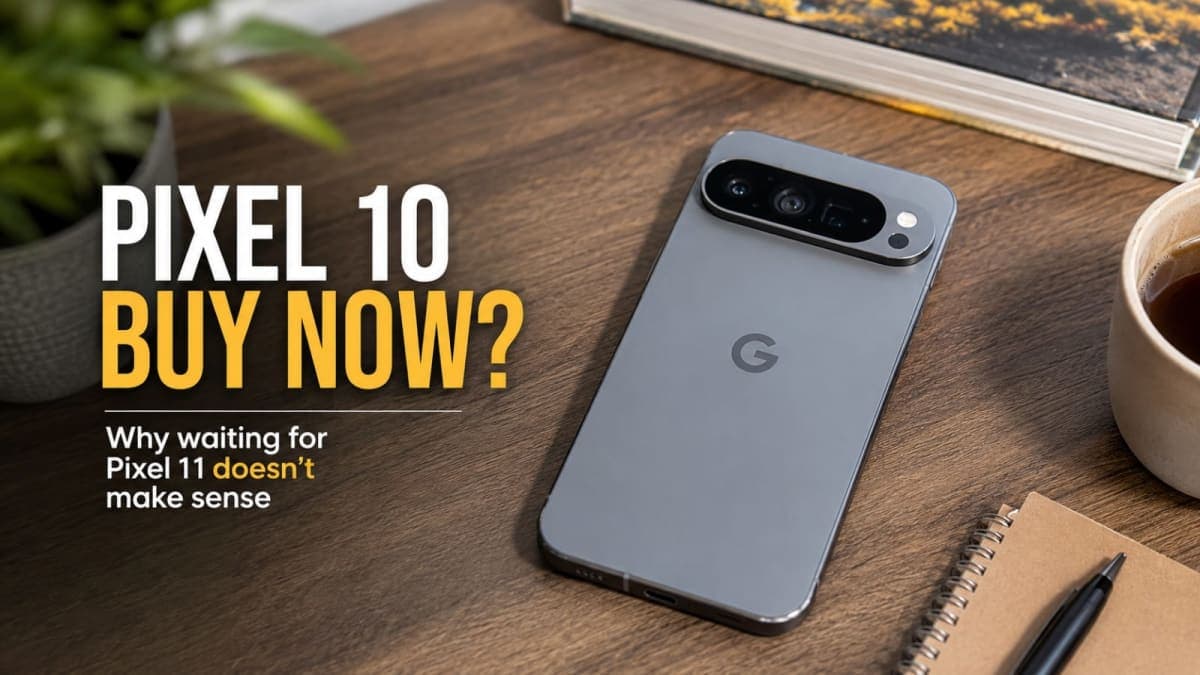
If you are looking to buy Pixel 10 now, do it. Waiting for the Pixel 11 makes less sense this year than it has in the past. The current model is already selling well below its ₹79,999 launch price in India, often in the low-to-mid ₹60,000s after offers. At the same time, rising memory and storage costs across the industry are pushing new flagships higher or forcing manufacturers to cut RAM. The Pixel 10 still gives you clean software, a proper triple-camera setup with 5x optical zoom, a full day of battery, and nearly six years of updates remaining. That combination is hard to beat once the next phone arrives at a higher effective cost.
The market has changed. Component shortages and higher prices for RAM and flash storage mean many 2026 phones deliver less for the same money or simply cost more. Google is not immune. Leaks around the Pixel 11 series point to a higher starting price in several markets and the complete removal of any 128 GB option. In India that could easily translate into a launch price above the Pixel 10’s original sticker, or a base model that feels less generous on memory. Buying the discounted Pixel 10 today locks in the hardware you actually get to use rather than gambling on next month’s announcement.
What the Pixel 10 actually delivers day to day
The base Pixel 10 is a compact 6.3-inch phone with an Actua OLED panel that runs at 60–120 Hz and peaks at 3,000 nits. Gorilla Glass Victus 2 covers the front. The aluminium frame feels solid and the IP68 rating means it survives rain and dust without drama. In the hand it is one of the more premium-feeling mid-flagships you can buy right now.
Inside sits the Tensor G5. It is not the fastest chip on the market for gaming or heavy multi-core work, but it is tuned for the things Google cares about: smooth daily use, on-device AI features, and efficiency. Reviewers consistently note lower heat than the previous generation and reliable performance for browsing, messaging, photography and Gemini tools. Heavy gamers will still look elsewhere; everyone else will find it fast enough.
The camera system is the biggest practical upgrade over older base Pixels. You get a 48 MP main sensor with optical image stabilisation and macro capability, a 13 MP ultrawide, and a 10.8 MP telephoto that offers true 5x optical zoom. Super Res Zoom extends further. Daylight shots keep the natural Pixel colour science people like. Night Sight remains strong. The telephoto finally lets you frame subjects without walking closer or relying only on digital crop. Selfies from the 10.5 MP front camera with autofocus are clean for video calls and social posts. Video reaches 4K at 60 fps on the main lens with solid stabilisation.

Battery capacity is rated at a typical 4,970 mAh. Real-world tests show a full day of mixed use with screen-on times commonly in the 6–8 hour range depending on brightness and 5G use. Wired charging tops out at 30 W (charger sold separately). Qi2 wireless charging at 15 W is supported, and reverse charging is available. For most people this is enough to finish the day with power left.
Software is the usual Pixel strength. The phone shipped with Android 16 and receives seven years of OS upgrades plus security patches. Support runs until at least August 2032. That means even if you buy it in August 2026 you still have roughly six years of feature drops, security fixes and major Android versions. Few Android brands match that timeline at this price after discounts.
Why the discounts matter more than the next launch
Launch price in India was ₹79,999 for the only configuration offered: 12 GB RAM and 256 GB storage. Over the past months the street price has dropped steadily. Recent listings on major platforms show the phone available around ₹62,999–₹67,000 before bank offers, exchange or no-cost EMI. That is a meaningful saving of ₹12,000–₹17,000 or more. When the Pixel 11 appears, early pricing signals from other markets suggest the base model will not undercut that discounted figure and may sit higher once Indian taxes and duties are applied.
Trade-in values on older phones remain usable on Flipkart and Amazon. Bank discounts and EMI options further reduce the cash outlay. The net result is a flagship-level software experience and a capable camera system for a price that used to buy only mid-range hardware a couple of years ago.
The Pixel 10 at current Indian prices gives you more years of guaranteed software support per rupee spent than almost any other new Android phone you can buy this month.
Where the Pixel 10 still has trade-offs
It is not perfect. Charging speed is only average by 2026 standards. The ultrawide is serviceable rather than class-leading, and portrait results at longer focal lengths can look softer than on the Pro models. Sustained gaming performance lags behind Snapdragon flagships. There is no charger in the box. Storage is fixed at 256 GB with no higher option on the base model. These are real limitations, but they are the same limitations the phone launched with. The difference is that you now pay less for them.
If you need the absolute best zoom, the brightest display or the highest sustained frame rates, the Pixel 10 Pro or a competing Ultra-class phone is still the better choice. For everyday photography, messaging, navigation, media and AI tools, the base model covers the ground cleanly.
What the Pixel 11 is expected to change
Google’s Made by Google event is scheduled for 12 August 2026. The Pixel 11 series is expected to follow shortly after. Leaks point to a Tensor G6 chip, possibly on a more advanced process node for better efficiency, a refined camera bar, and a glowing notification element on the Pro models. Battery sizes look similar or only marginally different. Display brightness may rise slightly on some variants. Base storage is expected to start at 256 GB across the board.
None of those changes sound transformative enough to justify paying a higher launch price when a year-old phone with proven software and strong cameras is already discounted. Component cost pressure also raises the chance that RAM configurations become less generous or that the overall package simply costs more in rupees. Waiting only makes sense if you specifically need the newest chip for on-device AI workloads that the G5 cannot handle, or if you want the Pro-level camera sensors and are prepared to pay for them.
Aspect | Pixel 10 (current street price) | Pixel 11 (expected) |
|---|---|---|
Starting price India | Often ₹62k–₹67k after offers | Likely higher than Pixel 10 launch |
Chip | Tensor G5 | Tensor G6 (rumoured) |
Camera | 48 MP + 13 MP + 10.8 MP 5x | Incremental updates expected |
Battery | ~4,970 mAh, full-day use | Similar capacity range |
Software support remaining | ~6 years from now | Full 7 years from launch |
Availability | In stock with discounts | Mid-to-late August 2026 |

Who should still wait
Wait only if you already own a recent Pixel or high-end Android phone that still works well, or if you specifically want the Pro camera hardware and can absorb a higher price. If your current phone is two or more years old, struggling with battery life, or missing modern AI features and clean software, the discounted Pixel 10 closes the gap immediately. You do not need to sit through another launch cycle and possible price rise.
Availability in India is straightforward. The phone is sold through the Google Store, Flipkart and Amazon with the usual exchange and financing options. Colours include the familiar Obsidian, Indigo, Frost and Lemongrass finishes. Service and warranty support follow Google’s standard Indian channels.
For most people deciding how to spend real money this month, the practical choice is clear. The Pixel 10 is proven, discounted, and still fully supported for years. The Pixel 11 will bring refinements, but the value equation currently favours the phone you can buy and use today. Check the latest offers on the major platforms, factor in any exchange value you have, and lock in the deal before the next launch resets the pricing conversation.
If you want broader context on current mid-to-high range options, see more guides on the site for comparisons that match different budgets and priorities.