
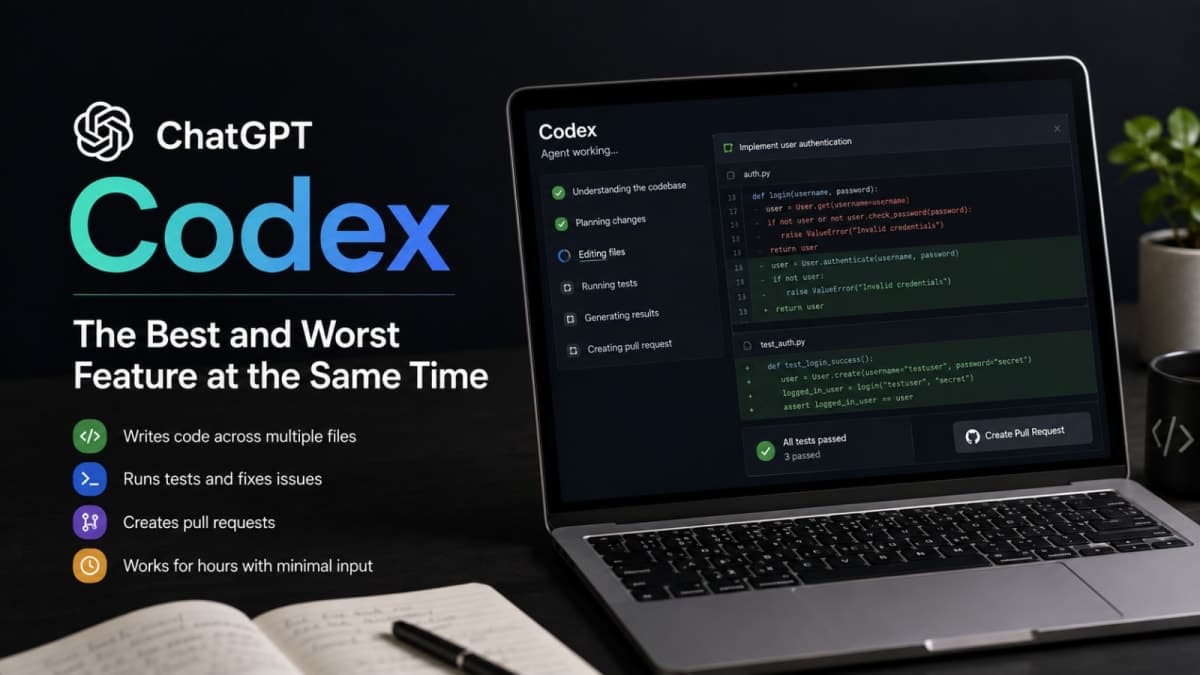
The ChatGPT Codex feature is its best and worst tool at the same time. It can take a clear task, work across multiple files, run tests, open pull requests and keep going for hours with minimal babysitting. That speed is real. The same power also makes it easy to accept code you do not fully understand, burn through limits, or ship subtle bugs that only appear later.
For Indian developers, freelancers, students and small teams, Codex sits inside the ChatGPT subscription most people already pay for. The question is not whether it is impressive. The question is how to use it without letting it quietly lower the quality of your work.
What Codex Actually Does
Codex is OpenAI’s agentic coding system, now tightly integrated into ChatGPT. You give it a goal instead of asking for one snippet at a time. It can explore a repository, plan changes, edit several files, run commands, check results and come back with a summary or a ready pull request.
Later updates added multi-agent workflows, background computer use on supported platforms, PR review help, memory of preferences, and the ability to connect more everyday tools. In short, it moved from “write me a function” to “handle this ticket while I do something else.”
End-to-end tasks. Feature implementation, bug fixes, refactors and test writing can run with far less back-and-forth than classic chat.
Parallel agents. Multiple pieces of work can progress at once inside the same project or across projects.
Review and iteration. It can read review comments, adjust code and re-check its own output.
Longer autonomy. Complex jobs that once needed constant steering can now run for extended periods before needing human input.
That combination is why many developers call it transformative. It is also why the risks scale with the power.

Why It Feels Like the Best Feature
The best part is simple: it removes the boring middle of many coding jobs. Boilerplate, repetitive fixes, test scaffolding, dependency updates and straightforward features no longer eat an entire afternoon.
For freelancers in India charging by project or by hour, finishing the mechanical parts faster improves margins. For students, it turns “I am stuck on the setup” into “I can focus on the actual logic.” For small product teams, it raises the baseline of what one person can ship in a week.
Because Codex lives inside the same ChatGPT account many people already use for writing, research and planning, the switching cost is low. You stay in one interface instead of jumping between a separate coding tool, a browser and a notes app. That convenience compounds over a long workday.
When the task is well-scoped and the acceptance criteria are clear, Codex often delivers usable results that need only light review. That is the version of the feature people celebrate online.
Why It Is Also the Worst Feature
The same autonomy creates new failure modes.
First, over-trust. Codex can produce large amounts of plausible code quickly. If you do not read the diff carefully, you ship logic you cannot defend in a code review or debug at 2 a.m. Students who submit untouched Codex output risk both academic trouble and weak fundamentals.
Second, hidden complexity. Multi-file changes and long-running agents can introduce subtle inconsistencies, incomplete edge-case handling or security oversights. The agent may pass the tests it wrote while missing the ones a careful human would add.
Third, cost and limits. Heavy agent use consumes tokens faster than normal chat. On Plus plans the ceilings appear sooner than many expect. What feels free at the start becomes a constraint once you run several parallel jobs every day.
Fourth, skill atrophy. If every hard problem is immediately handed to Codex, the muscles for reading unfamiliar code, designing clean architecture and debugging from first principles weaken. That matters when the agent is unavailable, the problem is novel, or the client asks you to explain the solution.
Finally, platform and workflow friction. Computer-use features and the full desktop experience have not been equally mature on every operating system. Teams mixed across Windows, Mac and Linux still need to check what works reliably for their setup.
Treat Codex like a fast junior developer who never sleeps: give clear instructions, review everything, and never let it merge without your eyes on the final result.
Practical Rules for Indian Users
Use Codex where the upside is high and the downside is easy to catch.
Good fits. Well-defined tickets, test generation, documentation updates, small features, migrations with clear before-and-after behaviour, and first drafts of UI components.
Risky fits. Core business logic, security-sensitive code, large architectural refactors, and any change you cannot personally explain to a teammate or interviewer.
Student rule. Generate, then rewrite or annotate in your own words. If you cannot walk through the code line by line, do not submit it.
Freelance rule. Factor review time into your estimates. The hours saved on writing are partly spent on careful checking.
Keep a short personal checklist: does the change match the request, do the tests cover the important cases, are there new dependencies, and would I be comfortable owning this code in six months? If any answer is no, send Codex back for another pass or fix it yourself.

Pricing and Access Reality
Codex access is tied to ChatGPT subscriptions. Plus is the common entry point for individuals in India. Pro and higher tiers raise limits and unlock heavier use. Exact rupee pricing moves with local billing and promotions, so check the current ChatGPT plans page before committing.
For light weekly use the Plus tier is often enough. For daily multi-agent work or long autonomous jobs, many people find they need the higher allowance. Track your own usage for two weeks; the pattern becomes obvious quickly.
There is also a CLI and IDE extension path for developers who prefer terminal or editor workflows. Those still authenticate with the same ChatGPT account, so the subscription decision stays central.
Should You Lean on Codex?
Yes, if you treat it as a force multiplier rather than a replacement for thinking. The developers getting the most value set tight scopes, demand tests, read every meaningful diff, and keep ownership of architecture and security decisions.
No, if you were hoping for a button that turns vague ideas into production-ready systems with zero oversight. That version does not exist yet, and pretending it does is how teams create expensive technical debt.
The ChatGPT Codex feature is currently one of the strongest coding agents available inside a mainstream subscription. Its best quality is speed with real agency. Its worst quality is how easily that speed hides incomplete understanding. Use the first. Guard against the second. That balance is what separates people who ship better work from people who simply ship more code they later regret.
For related practical AI advice, see more guides on the site. Tools change fast; the habit of clear requirements and careful review does not.