

Looking for gaming phones under 30000 that actually deliver in India? The strongest options right now are the Poco X7 Pro for raw performance and the Redmi Note 17 5G for marathon battery life. Both stay comfortably in budget after typical offers and handle popular titles without the heat spikes of older mid-rangers. Other solid alternatives exist if you need higher official frame-rate support.
Indian buyers in this range want phones that survive two-hour BGMI or COD sessions, charge fast enough to be usable again the same evening, and still feel responsive a year later. Spec sheets hide thermal throttling, software limits on frame rates, and speaker quality. Here is what actually holds up in daily use.
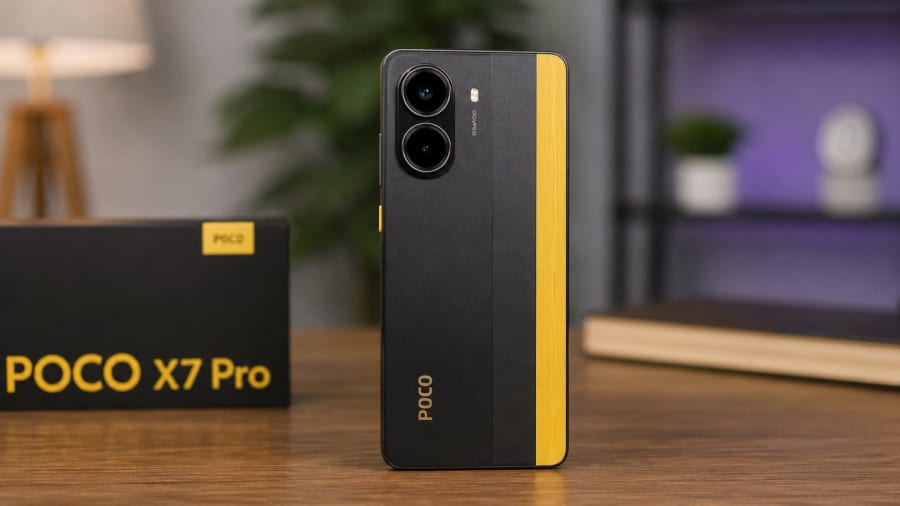
Poco X7 Pro: The performance pick
The Poco X7 Pro remains the clearest gaming choice under ₹30,000 in mid-2026. Current street prices sit around ₹23,999 for the 8GB + 256GB variant and ₹25,999 for 12GB + 256GB on major platforms. That puts a Dimensity 8400 Ultra chip, LPDDR5X RAM and UFS 4.0 storage firmly in reach.
Chipset and gaming. The Dimensity 8400 Ultra handles most modern titles at high settings with stable frame rates. Sustained performance is strong for the price, though BGMI often caps at 60 FPS even on this hardware according to multiple user and reviewer reports.
Display. 6.67-inch 1.5K AMOLED, 120Hz adaptive refresh, peak brightness up to 3200 nits, Gorilla Glass 7i. Colours are punchy and outdoor visibility is excellent. Touch sampling reaches high instantaneous rates useful for competitive play.
Battery and charging. 6550mAh silicon-carbon cell with 90W charging. Real-world gaming drains it, but a full top-up takes well under an hour. The phone stays under 200g despite the capacity.
Build and extras. IP68/IP69 rating, stereo speakers with Dolby Atmos, plastic back with metal camera island, IR blaster. No microSD slot.
Trade-off: cameras are competent but not class-leading, and HyperOS still carries some bloat. For pure gameplay and future-proofing at this price, it is hard to beat.
Redmi Note 17 5G: Battery first, gaming second
Launched in early August 2026, the Redmi Note 17 5G starts at ₹27,999 for 6GB + 128GB and ₹30,999 for 8GB + 128GB. Bank offers often bring the base model closer to ₹25,000. Its headline feature is an 8000mAh silicon-carbon battery — one of the largest in any mainstream phone at this price.
Display and feel. Nearly 7-inch 1080p AMOLED, 120Hz, up to 1800 nits peak, Gorilla Glass 7i, HydroTouch 2.0 for wet fingers, 960Hz PWM dimming. Large and comfortable for long sessions, though resolution is lower than the Poco’s 1.5K panel.
Performance. Snapdragon 4 Gen 4 is an efficiency-focused chip. It runs everyday games and lighter titles smoothly but will not match the Dimensity 8400 Ultra or Snapdragon 8s-series chips in high settings or sustained heavy loads. Cooling is basic graphite.
Battery reality. Xiaomi claims multi-day typical use and strong video playback numbers. In practice the 45W charger is slower than the 90W units on rivals, but the capacity means fewer mid-session top-ups.
Other notes. IP65, dual speakers (Xiaomi lists 200% volume boost), hybrid SIM + microSD, IR blaster, optical fingerprint. Weight is 225g and thickness 8.4mm — noticeable but manageable.
This is the phone for someone who games a few hours a day and hates carrying a power bank. Competitive high-FPS players should look elsewhere.
If your main games stay under high settings and you value battery life above peak frame rates, the Redmi Note 17 5G’s 8000mAh cell is the most practical advantage in this entire list.
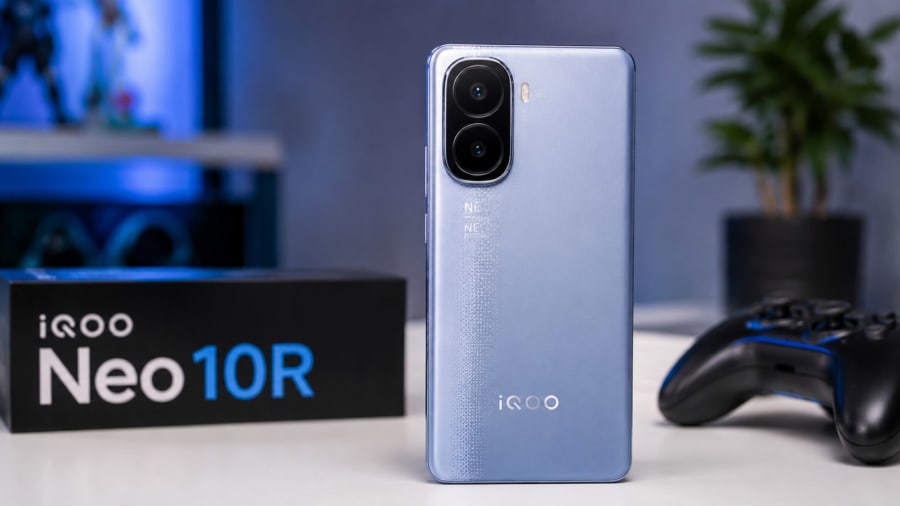
Strong alternative: iQOO Neo 10R
The iQOO Neo 10R often lands between ₹26,999 and ₹30,999 depending on variant and offers. It packs a Snapdragon 8s Gen 3, 6.78-inch 1.5K 144Hz AMOLED (peak brightness claimed at 4500 nits), 6400mAh with 80W charging, and better official support for higher frame rates in BGMI than the Poco in many reports.
Cooling is competent, haptics are praised, and the software is relatively clean for the brand. It is the better pure competitive pick if 120 FPS support in your main title matters more than the Poco’s slightly better sustained thermals or the Redmi’s raw capacity. Cameras and build quality sit in the same mid-range bracket as the others.
Quick comparison table
Phone | Chipset | Display | Battery / Charge | Approx. price |
|---|---|---|---|---|
Poco X7 Pro | Dimensity 8400 Ultra | 6.67" 1.5K 120Hz AMOLED | 6550mAh / 90W | ₹23,999–25,999 |
Redmi Note 17 5G | Snapdragon 4 Gen 4 | 6.99" 1080p 120Hz AMOLED | 8000mAh / 45W | ₹27,999–30,999 |
iQOO Neo 10R | Snapdragon 8s Gen 3 | 6.78" 1.5K 144Hz AMOLED | 6400mAh / 80W | ₹26,999+ |
Prices fluctuate with sales and bank offers. Always check current listings on Flipkart, Amazon and brand sites before buying. Storage is non-expandable on the Poco and iQOO; the Redmi keeps a hybrid microSD slot.
What actually matters for gaming under ₹30,000
Frame-rate stability over peak numbers. A phone that holds 60 FPS cleanly for an hour is more useful than one that hits 90 FPS then thermal-throttles. Check recent user videos of your main titles rather than relying only on AnTuTu scores.
Touch response and display brightness matter outdoors and in fast matches. The high-nit AMOLED panels on the Poco and iQOO help here. Battery size plus charging speed determines whether you can play after work without planning around the charger.
Software support is improving but still varies. Expect three to four years of major updates on these devices; security patches usually last longer. Avoid models that already feel thermally limited on day one — they will only get hotter as games grow heavier.
For most buyers the Poco X7 Pro hits the best balance of chip power, display quality, charging speed and current price. Choose the Redmi Note 17 5G if battery anxiety is your biggest complaint. Reach for the iQOO Neo 10R when high official FPS support in BGMI or similar titles is non-negotiable.
Test the in-hand feel if possible. A 225g phone with a huge screen feels different after two hours than a sub-200g device. Pair any of these with a simple cooling clip or case if you play in hot Indian summers. The rest is just deciding which compromise you can live with for the next two years.
For more everyday phone advice see our budget phone picks or browse more guides on the site.